Showing posts with label writers I've met but don't really know. Show all posts

Tuesday, June 19, 2012

The Best of Modern Arabian Fantasy: Saladin Ahmed

My latest blogpost is another interview on Black Gate. This time I spoke with Saladin Ahmed, author of Throne of the Crescent Moon. Obviously, I could not do a series on the best of modern Arabian fantasy without talking to Saladin, who got starred reviews from Kirkus, Publisher's Weekly, and Library Journal for his debut novel.

I asked Saladin, as I've asked all my authors, about the research process. His response: 

Well, I’ve been taught about Arab/Muslim history, and have had living Arab American culture in front of me, all of my life. So by the time I wrote Throne, I had a certain amount of ‘research’ almost hardwired into me. But I certainly did tons and tons of historical research as well: books on daily life in medieval Cairo, books on the topography of Baghdad, books on the history of middle eastern religion/mythology, etc. Ultimately, though, I wrote a secondary world fantasy rather than a historical because I wanted all of that research to be something I could draw on, rather than something I owed fidelity to.
He also gave some teasers about his next book in the Crescent Moon Kingdoms series. Head on over to Black Gate to read the whole piece.

Tuesday, May 15, 2012

My interview with Kai Meyer for BlackGate.com

Okay, catching up on my blogging still, last Friday I posted an interview on Black Gate with Kai Meyer, and have gotten more comments and feedback from that post than any other. Kai Meyer is a science fiction and fantasy author that you may not have heard of because he writes in his native German. Many of his books have been translated into English and have sold very, very well, but one series that has not been translated is The Stormkings, his Arabian fantasy series. It really, really needs to get translated. Here's his synopsis:

The story is set in the ninth century, during the reign of Harun al-Raschid. But it´s not a historical novel at all - actually I invented a kind of post-apocalyptic Orient. Five decades ago the jinn came out of the deserts, killed millions and enslaved the rest. Only a few cities are still unconquered. The first novel is the story of a journey from Samarkand to Baghdad, 1200 miles through the wasteland. Essentially it´s Mad Max on magic carpets. The hero, Tarik al-Jamal, was once the best smuggler on the sky routes of the Orient. No one rode a magic carpet like him - until he lost his love, Maryam, out in the desert, the “jinnland”, as people now call the deserts between Samarkand and Baghdad. Broken and lonely he now makes a living from illegal carpet races through the old town of Samarkand. But when his estranged younger brother Junis wants to lead an escaped slave girl, Sabatea, to Baghdad, Tarik fears for their safety and decides to dare one last journey through the desert and face the ghosts of his past. But out in the wastes they not only have to fight the creatures left over from the Jinn Wars, but also meet the Stormkings, guerilla fighters who ride on huge tornadoes through the desert. And that´s just the beginning. The story opens up considerably when Tarik, Sabatea and Junis arrive in Baghdad at the end of the first book.
See, what did I tell you? This needs to come out in English!!! Meanwhile, head on over to Black Gate to read the rest of the interview.

Wednesday, March 7, 2012

The Long Run by Mishka Shubaly

The Long RunThe Long Run by Mishka Shubaly
My rating: 5 of 5 stars

I don't normally read drug memoir essays. I'm tired of long, arrogant ruminations by people who've wrecked their lives and believe that in the process they have learned some deep truth about how existence really is this pointless wasteland (does it ever occur to them that if you destroy anything, it tends to look pointless and wasted afterwards?) and those of us who haven't dared to live on the edge subsist in a fiction of our own making (really, if I want to see truth, I think not taking hallucinogenics is the way to go, but hey, that's just me.) I'm amused by the idea that a gritty description of the smell, taste, and texture of vomit spewed into a gutter is a great artistic accomplishment.

This essay, however, walks the sword edge of truth between needless glorification of alcoholism and simplistic platitudes about getting clean. Shubaly's drinking didn't wreck his life in the conventional sense. He's one of those people with enough brain power that he can subsist on a cocktail of drugs and alcohol and still get straight A's in school and hold down a job. By the same token, quitting drinking didn't land him in a blissful existence full of love, acceptance, and beauty. Rather, this essay reads like a journey through the proverbial tunnel to the light at the end, except the light isn't the kind that warms you up and makes the world look glorious (he tells the reader what drug to take if you want to see that one), but rather the kind that illuminates life as it is, with all its shabbiness and drudgery, its disappointments, hard choices and all around frustrations. Most important, it faces head on the fact that once you give up one obsession, life will still ask you, "So what now?" and while the answers might come more automatically with practice, they will never get easier.

I am glad Mishka's back and willing to tell the tale of where he's been. He and I were middle school classmates, people who could probably recognize each other on sight (if we're looking), pronounce each others last names (Shubaly has the stress on the second syllable, if I remember correctly), and have on rare occasions said something to the other, and on even rarer occasions said something that requires more than a smirk, chuckle, or sarcastic thumbs up in response. For years we've been connected on Facebook, but only recently have I seen him tearing up the virtual hallways with his crazy sense of humor and posting the odd (in all senses of the word) comment on someone's wall. There are a lot of things I was happy to leave behind in middle school, but I'm glad my association with Mishka wasn't one of them. Life isn't always pretty, but it's the people we share it with and who pace us on the long run that make the journey worthwhile.

Saturday, December 31, 2011

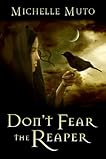
Don't Fear the Reaper by Michelle Muto

Don't Fear the Reaper (Netherworld #1)Don't Fear the Reaper by Michelle Muto
My rating: 5 of 5 stars

I've been aware of Michelle Muto for months, but only just got around to reading one of her books. She's an up and coming indie writer whom I hope we'll be hearing a lot more from.

If it weren't for holiday craziness, I'd have read this in one sitting - partly because it's well written and easy to devour, and partly out of desperation to see if things ever get better for the protagonist. I should warn you, the main character commits suicide in the first scene, and Muto doesn't pull punches when describing the scene, sensations, or the horrified reactions of family when they discover the body.

Once dead, Keely Morrison finds herself in purgatory, which in this case is right here on earth. Her welcoming party are a demon and a reaper, no angels, which doesn't bode well for where she'll end up, but here's the catch, there's some dispute among the higher powers over where she ought to spend eternity and the decision won't be handed down until her funeral. Her job in the meantime is to avoid any temptations that will take her out of heaven's reach.

But how easy is that to do in Keely's situation? She killed herself out of grief in order to find her sister, Jordan, a murder victim. The murderer is still at large and not slated to go to trial. Demons offer her the chance to take out her revenge on him, but if she does, that'll condemn her to hell. Add to this the fact that her demon escort, sent to tempt her, isn't always clear cut in his motives. Is he really trying to help her sometimes, or is that just another layer of deception?

Add to *that* the fact that Jordan is still in purgatory herself, when Keely assumes that she'd have gone straight to heaven. The story there puts yet another twist on the moral dilemmas of the plotlines. I'll admit I did predict the ending, but I still enjoyed sitting back and watching it unfold.


Monday, October 3, 2011

An Unsuitable Job For A Woman by P.D. James

An Unsuitable Job For A Woman An Unsuitable Job For A Woman by P.D. James

My rating: 4 of 5 stars


A very clever title for a book about an intelligent, self directed young woman named Cordelia with a talent for detective work who must take on her first solo case after the death of her boss. The case takes her to Cambridge, where a promising student has apparently killed himself. There are several discrepancies in this account that Cordelia must unpick. The truth looks considerably more sinister. The plot unfolds logically and systematically with skillful surprises and misleads. I am not the target audience for mysteries, so I am not very good at reading them. They are written for the reader who pays close attention to every detail as they attempt to figure out who did it. I don't. More often than not, I can guess the guilty party, though. In this case, I didn't. The writing is vivid and captures the feel of Cambridge life and its odd assortment of eccentric characters.

The end had several unexpected twists that were brilliantly set up throughout the course of the narrative, and yet were not predictable (in my opinion, at least.) The end tied up a minor plot point in a very satisfying way. My only criticism of the plot is that I did not believe that the mysterious message left in the prayer book was that easy to decipher. I don't think such a message would actually work in real life without more detail. Nevertheless, I cared about the main character, despite her flaws, and I could definitely see myself reading more from P.D. James.

I met the author when she gave a talk at my high school. It was odd, very few people turned out to see her, but she was the first real live author I ever saw talk about the writing process, and I was surprised and pleased to hear that it was so close to my own experience.


Monday, August 22, 2011

Drown by Junot Diaz


DROWN by JUNOT DIAZ
My rating: 4 of 5 stars

I read this kind of thing best when I've got a good and intelligent friend to talk it over with. I'm not the kind of person who unpacks the layers of modern literature very well on my own. I need the interaction because the act of communication forces me to grasp concepts more firmly than merely thinking about them does. DROWN is a series of short stories, most of which center around a greater story arc of one family's emigration from the Dominican Republic to New York City. Most of the stories are thick on atmosphere and tone and thin on plot action (let that be a warning to all plot junkies, though it isn't meant as an insult to Junot). I'll admit that the last story held my attention best, just because it had the strongest narrative, and if you're not sure about the hardcore literary style of the book, I recommend reading that last story first to get grounded. There is a lot of swearing and some gore and sex and drugs, so avoid if you don't like reading about that kind of thing. His story, "Aurora", captured the nauseating netherworld existence of a drug addict so effectively that I felt a little dizzy after I read it.

Like many of the authors I review, Junot Diaz is one I have met - these days that's because I've met a lot of authors, not because I go out of my way to read stuff by people I've met. He was in Santa Fe for an event at the Lensic Theater, an interview by Samuel R. Delany. Alas, I could not make it to that show, as I was very pregnant and very sleep deprived, but I did make it to dinner with him and Delany beforehand. My writer's group, many of whom knew Delany, set that meal up, and there were about eight of us around the table. Those more published than I shared stories about their adventures in the business. Mr. Diaz was very personable, introducing himself as "Junot" and genuinely interested in meeting our motley crew of writers and aspirings who knew Delany well enough to call him "Chip" rather than Samuel. Seated at our table, he could have been anyone, and he didn't conform to the industry norm of looking down his nose at us science fiction hacks. A lot of fantastic work is done by total jerks and many wonderful people write utter drivel. Junot Diaz is a pleasant exception to both. If you are a fan of his, I'd encourage you to reach out to him - in a sane, non stalkerish way please.

View all my reviews


Friday, August 12, 2011

Ysabel by Guy Gavriel Kay

YsabelYsabel by Guy Gavriel Kay

My rating: 2 of 5 stars


This book was tough for me to get though. In fairness, though, I should say that if you like atmospheric writing and a cool setting, this may be the perfect book for you. I'm a plot junkie, and if I don't see interesting moving parts coming together, I get bored.

The premise of ancient legends coming alive in modern times was interesting enough, but the characters' main objective was to find an individual, and their searches were uninteresting, just a lot of traipsing around Provence to historically significant places that weren't presented in a way to add much to the story. Other characters would show up and have random fights, a whole scene was devoted to one of them getting his fight injuries bound up for a second time (because the first time wasn't interesting enough?), and none of this moves the plot forward at all. There're allusions to a tragic family history and a final revelation that made me shrug.

But what is unfair about this, as I'll openly admit, is that I downrate authors who've disappointed my expectations. I *love* Kay's "Lions of Al-Rassan". That had a richly layered narrative structure that was complex and captivating. I thus hold the man to a higher standard. "Tigana" and "A Song for Arbonne" also held my attention, so I'm not going to give up on Kay. I recommend those other books over this one, though.


View all my reviews